Powering tomorrow: Challenges and trends that shape the future of energy

We interviewed Wind River® energy and utilities experts Diego Buffa and Karim Dioury to get their views on the latest trends and challenges in the industry, as well as the path forward.
CURRENT INDUSTRY CHALLENGES
Diego, as an innovator in software and embedded devices for more than 20 years, tell us about the current challenges in the energy industry related to digital transformation and modernization.
Diego Buffa: The main challenge facing the energy industry today is twofold: transition and increasing demand. We are living during a phase when we are transitioning from energy generated from fossil and nuclear fuels to renewable energy. Drivers of this transition are health, climate change, and of course economic and political circumstances.
From 2010 to 2019, the competitiveness of wind and solar power substantially increased. Unit costs of solar energy dropped by 85%, wind energy by 55%, and lithium-ion batteries by 85%. In many regions today, solar and wind energy are the cheapest in terms of new installations.
Recent wars and international political scenarios have made energy independence and security crucial. Many countries cannot rely on importing fossil fuels or nuclear fuels from other regions. We have seen what happened to Europe, which was so dependent on gas from Russia. With renewable energy, the scenario is different. For example, if a country stops supplying solar panels, the existing ones continue to produce energy.
Regulations in some countries are pushing to accelerate this transition. The EU has ambitious energy and climate targets for 2030.
If we translate this transition and increased demand into technical challenges, it is clear that there will be the need to balance power consumption with intermittent local production: Energy production from renewables is not constant. We are moving from production sites on an order of 10s (nuclear, coal, gas) to an order of 10,000s in intermittent renewable production sites.
Consumption may almost double in the evening in winter, for example, or at noon in the summer in hot countries. Usage of electric cars will increase unpredictable energy demand.
In the near future, we may also face a new challenge: a possible decrease in traditional energy consumption. LED lights, low-energy housing, and energy efficiency in general will translate to lower traditional consumption, while electric cars, ebikes, and other electric vehicles will dramatically increase consumption volatility and predictable energy demand.
The price of energy will also be regulated by production and demand, which could make prices volatile if that production and demand are not well balanced. We have already seen the serious impact of this on the European economy in 2022.
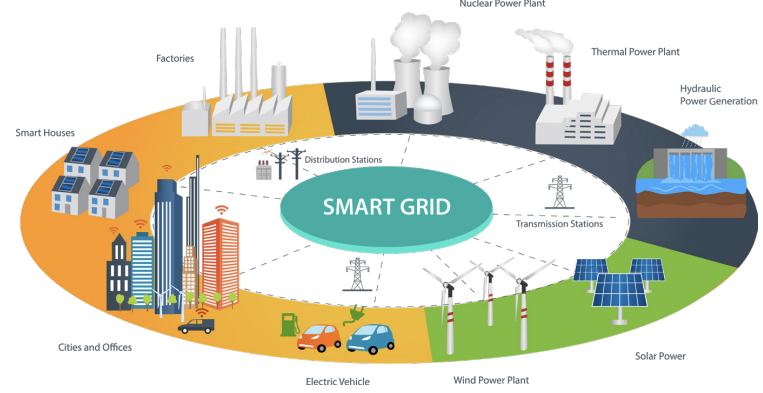
To summarize, we need a massive investment in the energy network. Then the ongoing challenge will be to monitor, measure, and optimize energy use in a modern and smart grid.

DIEGO BUFFA
Diego Buffa graduated from the University of Genova with a degree in electronic engineering and has spent most of his career focusing on software and embedded devices. He has been with Wind River for more than four years, with a concentration on industrial accounts in the EMEA region.
CURRENT INDUSTRY TRENDS
Karim, you’ve been in the trenches of energy distribution for more than a decade. Tell us about the trends in this part of the industry, and help us know what we should pay attention to.
Karim Dioury: Given all the challenges that Diego mentioned requiring investments, we know that the old way of operating is no longer applicable. Radical shifts are needed.
Traditionally, energy solutions relied on dedicated operational technology (OT) solutions for protection and control of applications connected to central SCADA (supervisory control and data acquisition) control rooms. These turnkey solutions and costly approaches are no longer applicable to an autonomous smart grid.
There is an inevitable trend to take advantage of machine learning and artificial intelligence, but this requires a shift from a centralized-control architecture to a distributed system able to autonomously balance the energy in the grid. Data generated by the grid or coming from the cloud will be integrated into the smart grid itself to balance the network and optimize energy efficiency.
New solutions should be flexible and updatable, but this requires shortening the development and deployment cycle.
Another important trend is the decoupling of software and hardware to enable the usage of cheaper, general-purpose hardware.
Decoupling applications from hardware, plus AI infusion and microservice architecture adoption, have already been done in telco. It is also happening in auto and in just about any market moving to digitalization.
The energy market is undergoing a transformation similar to what is happening in the telco market: Tier 1 suppliers are providing high-availability software platforms, with applications running in a virtualized environment and/or in containers in a Kubernetes cluster.
We can say that one big trend is shifting from traditional protection, automation, and control (PAC) applications to virtual PAC applications (vPAC). This is similar to what happened in the telecom industry, when it moved from network functions to virtualized network functions.
This is driven mainly by the fact that renewable energy has become increasingly popular with consumers, but many electricity providers aren’t yet equipped to add these resources to the grid. Energy companies need to balance the workload to manage distributed energy resources (DERs), and scalability and flexibility are key. The ability to reconfigure, scale, expand, or reduce a substation based on the demand and production of energy becomes a huge benefit.
Of course, smart grids and renewable energy are not the only reasons for this trend. There are many other advantages that virtualization and containerization add, such as cost savings, with less cost in operations and fewer cables compared to a physical substation. Or reliability and resilience, which can reduce downtimes and instability on the line. Lower infrastructure costs might open the market for new countries in other regions of the world that are rich in renewable energies, such as Africa — rich in both sun and wind, especially in deserts.
Energy is a segmented market, and each segment has its own peculiarities and requirements. For example, production requires reliability and efficiency. It is also a highly regulated segment (e.g., IEC 61850), and transmission requires high availability and scalability, while distribution must handle space and cost.
And a common trend to all segments of the energy market is cybersecurity. Needless to say, that is critical for the continuous delivery and use of energy for everybody.
We see that today there is a lot of focus on transmission and distribution, especially in terms of modernization, where convergence of IT and OT technologies may really play an important role.
Energy digitalization will bring better outcomes for electricity producers, end consumers, and the environment — but it will change the landscape of the market. The roles of solution providers and power generators, and the transmission and distribution of electricity, must all evolve.


KARIM DIOURY
Karim Dioury graduated from the University of Paris with a PhD in microelectronics. He has spent most of his career focusing on software for electronics design and embedded systems within the semiconductor, energy, and process automation markets. He has been with Wind River for more than 14 years, with a concentration on industrial accounts in the EMEA region.
“We need a massive investment in the energy network. Then the ongoing challenge will be to monitor, measure, and optimize energy use in a modern and smart grid.”
— Diego Buffa
“New solutions should be flexible and updatable, but this requires shortening the development and deployment cycle.”
— Karim Dioury
“We see that today there is a lot of focus on transmission and distribution, especially in terms of modernization, where convergence of IT and OT technologies may really play an important role.”
— Karim Dioury
“We know that the old way of operating is no longer applicable. Radical shifts are needed.”
— Karim Dioury
“We have seen what happened to Europe, which was so dependent on gas from Russia.”
— Diego Buffa
“Lower infrastructure costs might open the market for new countries in other regions of the world that are rich in renewable energies, such as Africa — rich in both sun and wind, especially in deserts.”
— Karim Dioury
HOW WIND RIVER CAN HELP
Diego, you explained today’s challenges in the energy segment. How should we address them?
Buffa: 5G, as an edge computing solution, can significantly reduce the connectivity and computing costs of deploying and maintaining intelligence at the edge. It provides high-speed IoT connectivity with low latency, high availability, and cybersecurity features that fulfill the requirements for Industry 4.0 and autonomous systems.
Additionally, in this highly connected critical infrastructure, cybersecurity is a major concern and must be considered during the entire lifecycle — during development, deployment, and operation.
DevSecOps methodologies and innovative solutions to improve monitoring, protection, and vulnerability mitigation become major topics to be addressed in digital transformation. Wind River supports a secure development lifecycle (SDL), which is aligned to the NIST 800-218 Standard and applied to all its products.
vPAC applications also need a reliable CaaS solution. Wind River Studio Operator enables building an on-premises cloud for a transport network and for eLxr Pro Server, a scalable cloud-native platform to address distribution and power generation.
Finally, the real-time requirements of OT solutions cannot be neglected. It is crucial, therefore, to rely on technologies that have a solid foundation in the OT world in terms of criticality, real time, and longevity but that also have the ability to modernize and keep up with the pace of new IT trends and technologies.
Wind River is more than 40 years old and operates in the OT world, enabling billions of devices that run every day in critical environments where safety, real time, and longevity are essential. Moreover, Wind River has always been a pioneer in providing innovations for integrating emerging technologies. The first real-time operating system to include containerization technology was VxWorks®, the flagship Wind River product, which today runs in most transmission and distribution substations and many energy production plants.
The DNA and the heritage of Wind River in the OT world, in synergy with its bent toward innovation, bring new technologies to fulfill safe, critical, and real-time requirements that will play an important role for the energy use and distribution of the future.