


The Intelligent Edge for Space
Cloud-Native Software Tools and Simulation Capabilities for Space Systems

INTRODUCTION
Space systems and their associated technologies have benefitted society for decades, and they will continue to shape the future of industry for many more. As space becomes increasingly commercialized, convergent trends are reducing the financial burden of operation while simultaneously advancing the capabilities of space systems.
The use of space-based military assets has been an option for 60 years, with its genesis in Cold War tensions, and military doctrines consider space and its exploitation to be important to modern warfare. Many countries with active space strategies have reorganized their military forces in recent years and developed robust and capable space services, including space-based intelligence, surveillance, and reconnaissance.
The Space Foundation projects that the space economy will grow beyond $634 billion by 2026, while the global space economy grew 9% year-over-year in 2021 (Forbes, 2022). This growth was boosted by high levels of private funding, given advances in technology and growing public sector interest. Development and deployment of reusable rockets, aircraft-launched rockets, and small satellites (SmallSats) is also growing. All of these systems are increasingly reliant on software systems, driving aerospace and defense organizations worldwide toward an unprecedented level of focus on building complete intelligent systems for the future.
Wind River® has been involved in space systems for more than 25 years. As the leading software supplier for the development of intelligent edge devices, it is the partner of choice for the journey into the future.
Learn More >> www.windriver.com/inspace
DIGITAL TRANSFORMATION
Digital transformation is more than just digitizing older analog devices; it is about a complete change in the way intelligent edge devices are developed, deployed, operated, and serviced. This is a fundamental shift in the way companies think about products vs. solutions. The space industry is no different in that respect. It is of course harder to deploy systems, and servicing is remote, but that does not mean intelligent space systems cannot digitally transform.
DEVSECOPS
In the enterprise IT world, digital transformation has led to the wide use of modern software philosophies, such as agile development and, subsequently, DevOps (development and operations). This has evolved into DevSecOps (development, security, and operations) by automating the integration of security at every phase in the development lifecycle. This methodology allows us to develop, deploy, and operate IT systems securely. We can deploy new features, or fix problems with deployed software, more rapidly than with legacy IT environments.
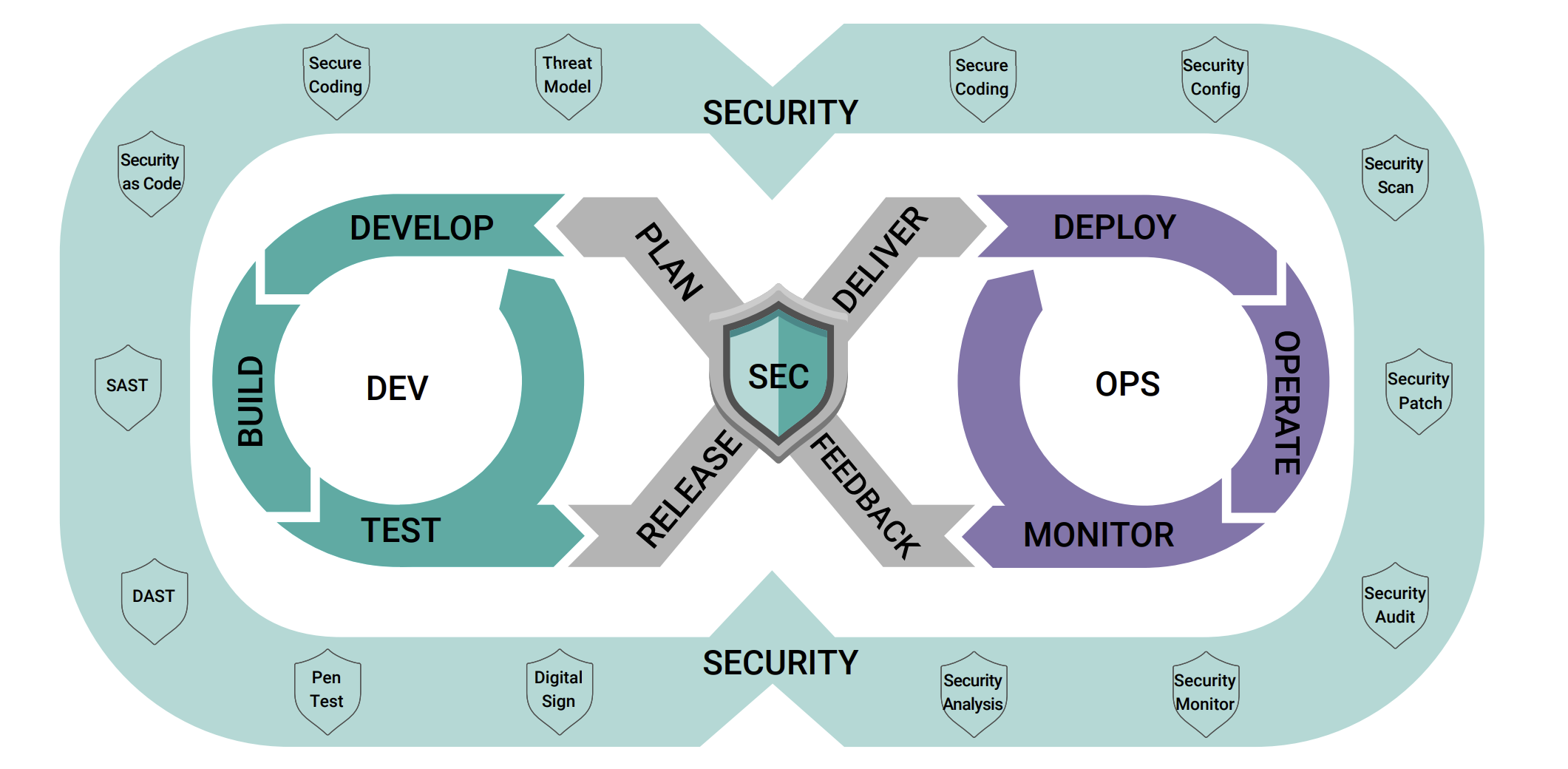
Edge systems are no different, except that often they include control systems, and these cannot necessarily be dynamically upgraded. In space, these control systems often manage the flight of the satellite, allowing it to maintain altitude, or to avoid the increasing problem of space debris. This means we need to partition our system in a way that allows us to upgrade payload software rapidly, but also to protect critical systems for a more controlled upgrade. This leads us to an open architecture design.
OPEN ARCHITECTURE
At the base of any intelligent edge solution must be an open architecture. These systems are being deployed in remote locations (whether low Earth orbit or deeper in space), and so servicing becomes a challenge. If we want to reap the rewards of deploying these systems, their operational life needs to be long (decades), so an open architecture makes sense so that upgrades to both hardware and software are possible — both through remote interfaces.
Open architecture allows for a technology infrastructure with open specifications. This means that a modular design can be easily upgraded as components become obsolete or need updating. At the hardware level, this could be achieved by leaving the architecture as flexible as possible through use of reconfigurable technologies, such as FPGA.
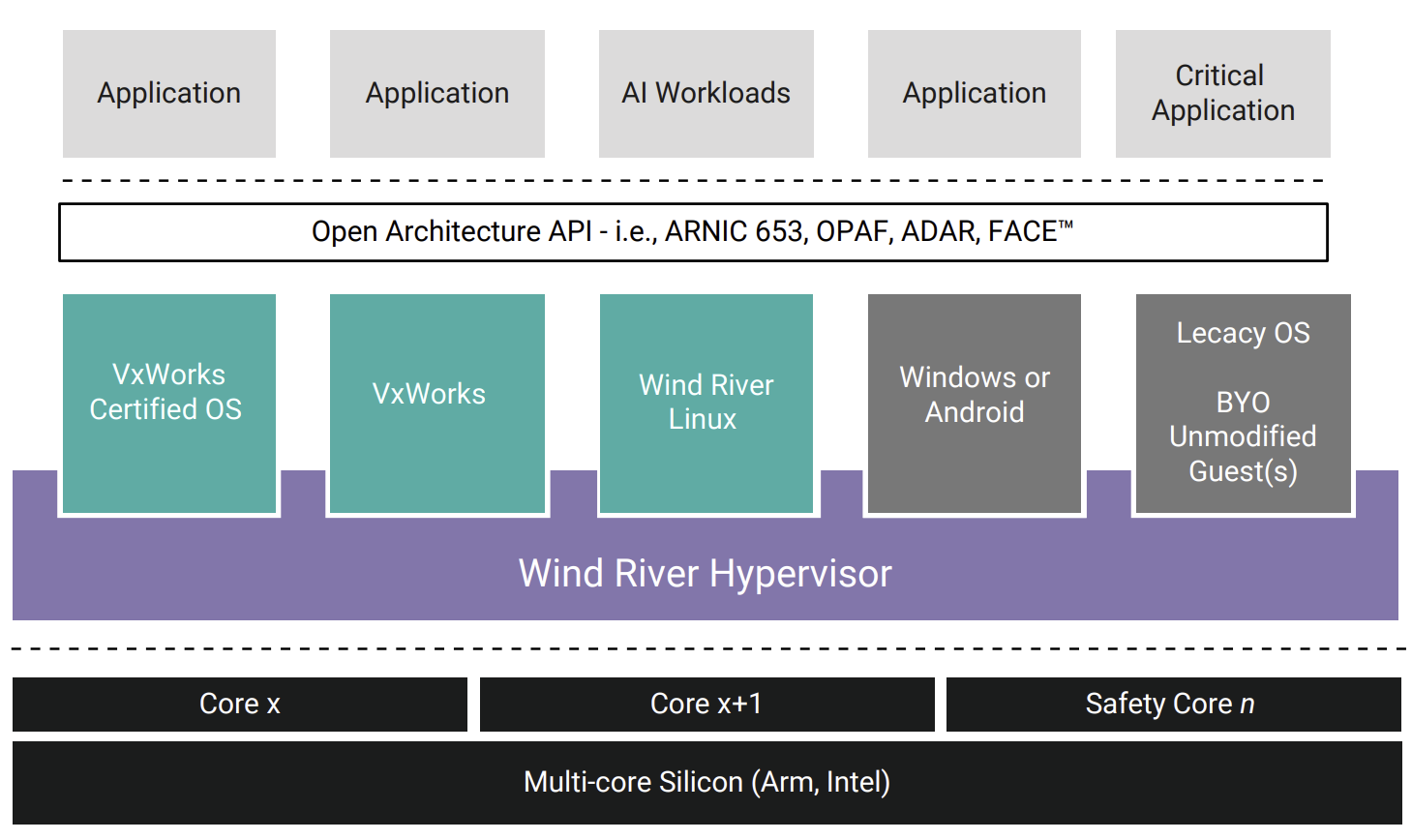
For software, this is a lifecycle discussion, as we think about how we develop, deploy, and operate software across many years. It also allows us to partition a system, making use of containers to isolate applications and a virtual machine environment to protect critical control systems. Our DevSecOps environment can easily upgrade and deploy new features and fix problems in the payload application containers, while the platform control software can be maintained through a more secure mechanism.
We then need to think about how we upgrade systems, how we monitor performance of systems, and how we enable collection of data about current systems. Collecting data is key, and this must be configurable — we do not always know what data to collect and so must use a digital feedback framework to enable future sources of data if needed.
WHY WIND RIVER?
Deploy
Wind River Helix™ Virtualization Platform provides an open architecture framework that consolidates multi-OS and mixed-criticality applications onto a single edge compute software platform, simplifying, securing, and future-proofing critical infrastructure solutions.
For real-time deterministic control systems, VxWorks® is the industry-leading RTOS that has been successfully deployed on multiple intelligent space systems. VxWorks can also be used to meet safety requirements for manned missions or wherever safety is required.
With a comprehensive suite of packages and lifecycle services, Wind River Linux enables you to build and support intelligent space devices.
Operate
Once spacecraft have been deployed and become active, fleet management and daily operation become important concerns. The DevSecOps environment becomes invaluable in managing security patches and software updates to change the various payload systems. The status of each spacecraft in the fleet inventory can be monitored and verified to ensure that security is up to date and systems are functioning well for intended missions. Management of fleets can be a risky proposition without a system to make sure that there are no weak points and attack vectors that escape notice.
A practice that has proven useful in avionics can also be applied to spacecraft. Aircraft equipped with an internal cloud server can use containerized applications for updating and maintenance. Similarly, this kind of software architecture can be used in spacecraft. Technology developed by Wind River to partition aircraft systems could also be used in the same way to partition applications in spacecraft.
Service
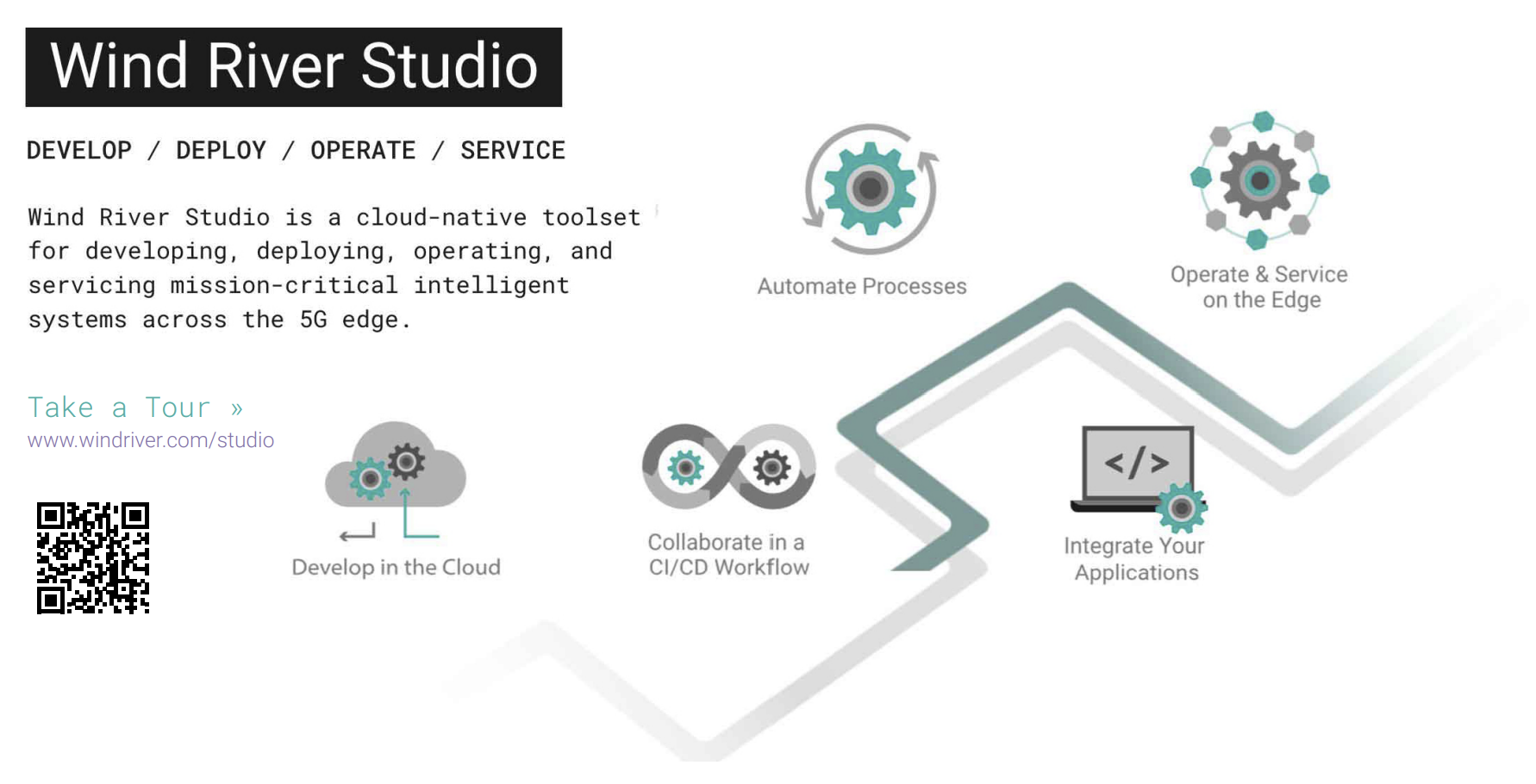
Wind River Studio Design Services provides capabilities to educate teams about workflow optimization, acceleration of tools integration, creation of new board support packages, integration of legacy or third-party OSes, creation of digital twin models, and security services.
Wind River is a global leader in delivering full lifecycle services for any design around the world. This includes architecture and implementation services, security assessments, and lifecycle security support.
Wind River draws on decades of experience to help you achieve the stringent industry safety standards and certification requirements for your software stack and application.
CONCLUSION
Space systems and their associated technologies have delivered multiple benefits for society and will continue to shape the future of industry. This includes both commercial space, which is continuing to grow, and the use of space-based military assets as many countries implement space strategies.
As these technologies become increasingly reliant on software systems, look to Wind River, with more than a quarter century of experience in space, as the leading software supplier for the development of intelligent edge devices.