



Accelerating Safety-Critical Innovation: Wind River Integrates with Anduril Lattice Sandbox for Next-Gen Situation Awareness and C2
In today’s rapidly evolving defense and aerospace landscape, the pace of technological innovation can define mission success. Wind River is embracing a forward-leaning strategy by securing early access to the Anduril Lattice™ Sandbox and integrating with its robust Lattice SDK™. This move enables us to streamline and expedite bridging capabilities such as Lattice C2, Lattice Mesh, and other advanced solutions across both enduring and emerging airborne and space safety-critical systems.
Bridging Innovation with Operational Readiness
The Anduril Lattice Sandbox provides a flexible and secure environment for testing, validating, and extending Lattice’s advanced command and control capabilities. By integrating Wind River’s solutions into this sandbox, organizations can accelerate the deployment of interoperable systems that are mission ready without compromising safety or compliance.
Streamlining Complex Integrations
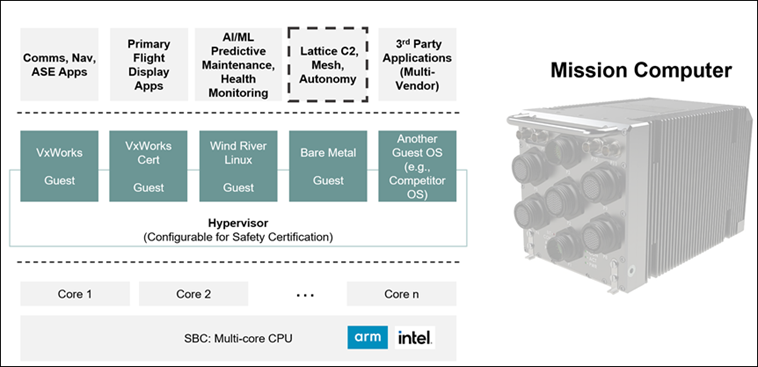
One of the biggest challenges in the airborne and space safety-critical domain is the integration of diverse systems and communication layers. Wind River’s early engagement with the Lattice SDK allows developers and system integrators to:
- Rapidly prototype and validate Lattice C2 command and control workflows.
- Seamlessly extend Lattice Mesh network functionality across heterogeneous platforms.
- Reduce development cycle time while maintaining rigorous safety-critical certification standards.
This integration ensures that both legacy and next-generation platforms can operate cohesively, enhancing situational awareness and operational effectiveness across missions.
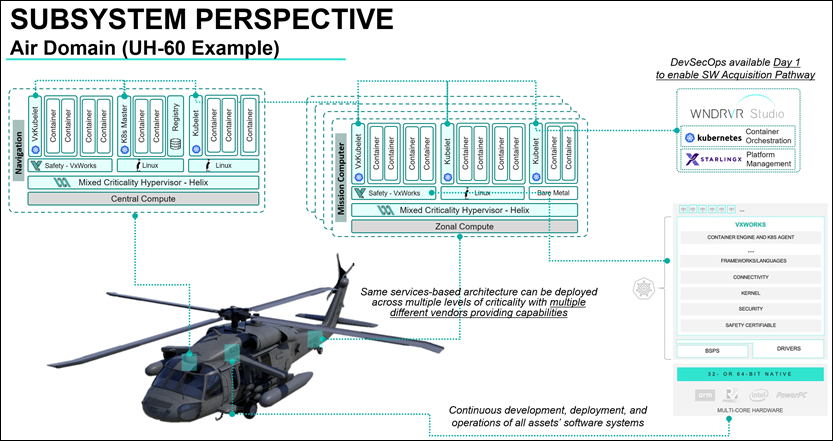
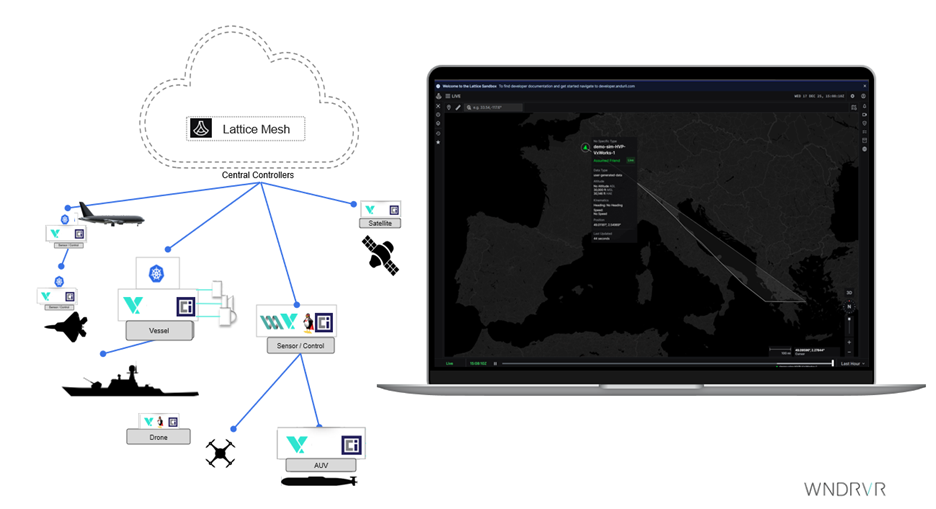
Anduril Lattice™ serves as a powerful mesh-networked command-and-control (C2) platform that fundamentally transforms military operations by ingesting and fusing telemetry data from diverse sources across the battlespace. The system enables seamless import of critical telemetry data — including latitude/longitude coordinates, heading, altitude, velocity, and sensor readings — from multiple assets and platforms into a unified operational picture. By aggregating this real-time data through its distributed mesh architecture, Lattice provides commanders with unprecedented situational awareness and advanced analytics capabilities, enabling faster decision-making cycles and more effective coordination of joint operations. Wind River‘s role in this ecosystem is crucial for defense system integrators, as its ruggedized hypervisor technology and VxWorks® real-time operating system provide the foundational infrastructure that future-proofs legacy and next-generation platforms. Wind River solutions offer standardized connectivity frameworks and secure virtualization layers that simplify the integration of various embedded systems, sensors, and platforms into Lattice OS, ensuring that defense systems can readily contribute their telemetry streams to the C2 mesh while maintaining the safety-critical real-time performance and cybersecurity requirements demanded by modern warfare environments.
Driving Value Through Forward-Leaning Collaboration
By aligning with Anduril early in the development lifecycle, Wind River not only mitigates technical risk but also unlocks measurable value for defense and aerospace stakeholders:
- Operational efficiency: Accelerated testing and integration reduce time-to-mission readiness.
- Cost optimization: Streamlined development cycles reduce resource expenditure and engineering overhead.
- Future-proof capability: Seamless bridging is supported between legacy systems and next-generation airborne and space platforms.
A Strategic Advantage for the Safety-Critical Sector
In a domain in which precision, reliability, and adaptability are nonnegotiable, Wind River’s approach ensures that customers can leverage cutting-edge technologies faster, more safely, and with lower risk. The collaboration with Anduril empowers teams to deliver interoperable, resilient solutions that keep pace with the evolving demands of modern defense and aerospace operations.
Getting Started
Step 1: Access the Lattice Sandbox Portal
Navigate to the Lattice Sandbox Portal to begin your integration journey: sandboxes.developer.anduril.com/login/?ref=%2F
Step 2: Obtain API Tokens
Retrieve your authentication tokens by following the official guide: developer.anduril.com/guides/getting-started/sandboxes#get-the-tokens
These tokens are essential for authenticating your system’s connection to the Lattice OS platform and enabling secure telemetry data transmission.
Step 3: Set up Your Development Environment
Configure your development environment using the setup guide: developer.anduril.com/guides/getting-started/set-up
Step 4: Explore Integration Resources
Familiarize yourself with the following resources to accelerate your Wind River to Lattice integration:
- Developer documentation: developer.anduril.com
- Code samples: developer.anduril.com/samples/overview
- API reference: developer.anduril.com/reference/overview/overview
- Sandbox guide: developer.anduril.com/guides/getting-started/sandboxes#get-the-tokens
Getting Started with Wind River Software Development Kit
Step 1: Select Your Platform
Wind River offers multiple SDK options, depending on your requirements:
- VxWorks SDK
Access to VxWorks SDK features and tools for rapid prototyping and evaluation:
- VxWorks labs: www.labs.windriver.com/vxworks-sdk
- Documentation: docs.windriver.com/vxworks
Ideal for safety-critical and deterministic real-time applications
- Wind River Linux SDK
For embedded Linux development and open source components:
- Wind River Linux: www.windriver.com/products/linux
- GitHub repository: github.com/WindRiverLinux25/wrlinux-x
Optimized for edge computing and IoT deployments
Step 2: Install Development Tools
Download and install the appropriate SDK and toolchain:
- Configure your IDE (modern vs. code integration).
- Set up cross-compilation toolchains for your target hardware.
Step 3: Explore Integration Resources
Leverage these resources for Lattice OS integration:
- Developer documentation: docs.windriver.com
- Knowledge Forum: support2.windriver.com
- API references: Platform-specific documentation for networking and hypervisor capabilities
These tools provide the foundation for connecting your Wind River-based embedded systems to Anduril Lattice for C2 operations.
Example
Wind River’s early access to the Anduril Lattice Sandbox and integration with Lattice SDK exemplifies our commitment to pushing the frontier of safety-critical innovation. By enabling seamless bridging across airborne and space platforms, we help organizations achieve operational superiority while accelerating the adoption of advanced, mission-critical technologies.
In this example, we leverage telemetry data from a Wind River–certifiable graphical display demo running on Wind River® Helix™ Virtualization Platform. VxWorks operates in a secure partition, collecting real-time flight data that is exported to Anduril Lattice via a KML (Keyhole Markup Language) file.
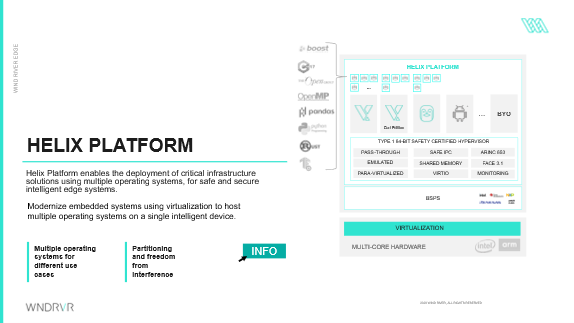
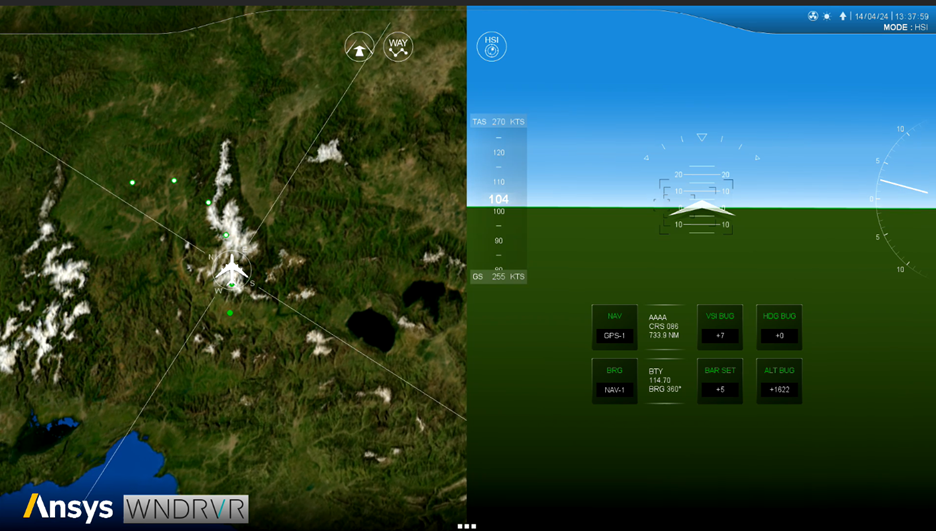
Partition 1: VxWorks Cert guest:
- Running Ansys SCADE Display for certified graphical rendering
- Running Ansys ARINC 661 Server for standardized cockpit display communication
- Generates real-time telemetry data from the flight display application
This ARINC 653 partitioned architecture ensures deterministic real-time performance and safety-critical isolation, meeting DO-178C certification requirements while enabling secure data export to Lattice Mesh.
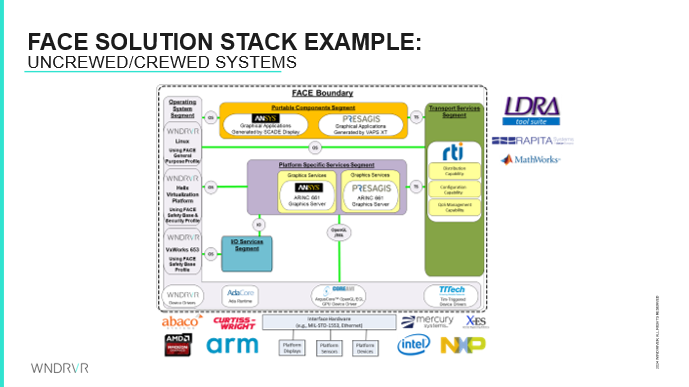
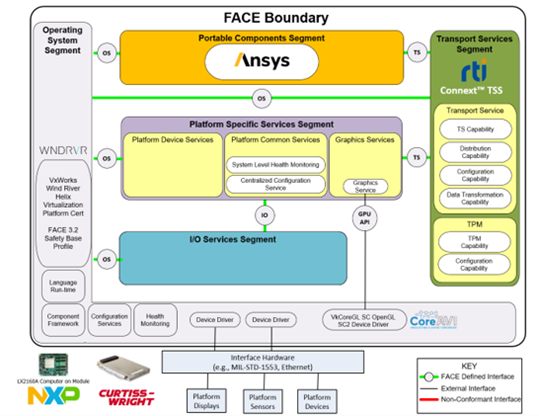
Extracting and formatting this data can be done with a wide range of libraries or existing frameworks.
KML is an XML-based file format used to display geographic data in mapping applications. Originally developed for Google Earth, KML allows you to define:
- Geographic locations (latitude/longitude coordinates)
- 3-D models and overlays
- Flight paths and trajectories
- Icons, labels, and descriptions
- Time-based animation of moving objects
KML is widely adopted in defense and aerospace for visualizing asset positions, sensor coverage, and mission tracks.
Lattice Format Support
Anduril Lattice supports a multitude of data formats and standards to maximize operational availability and interoperability across diverse defense systems, including:
- KML/KMZ
- GeoJSON
- CoT (Cursor on Target)
- STANAG protocols
- API integrations using tokens back to the system.
The choice of format depends on your specific mission requirements and existing system architectures. Explore the full range of supported formats and integration patterns at the Lattice integration guide: developer.anduril.com/guides/getting-started/set-up.
Select the Geo-Entities tab on Lattice.
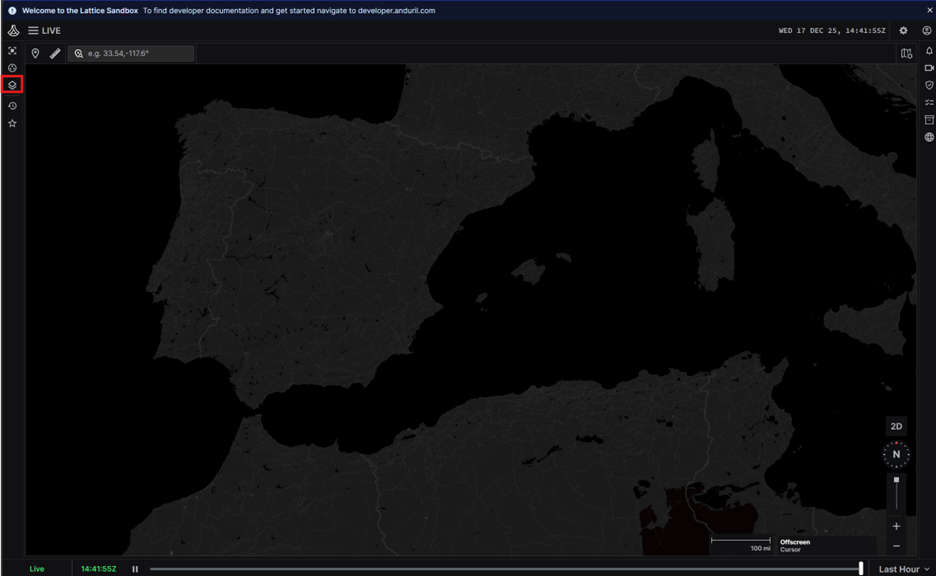
Add GEO-Entities select line.
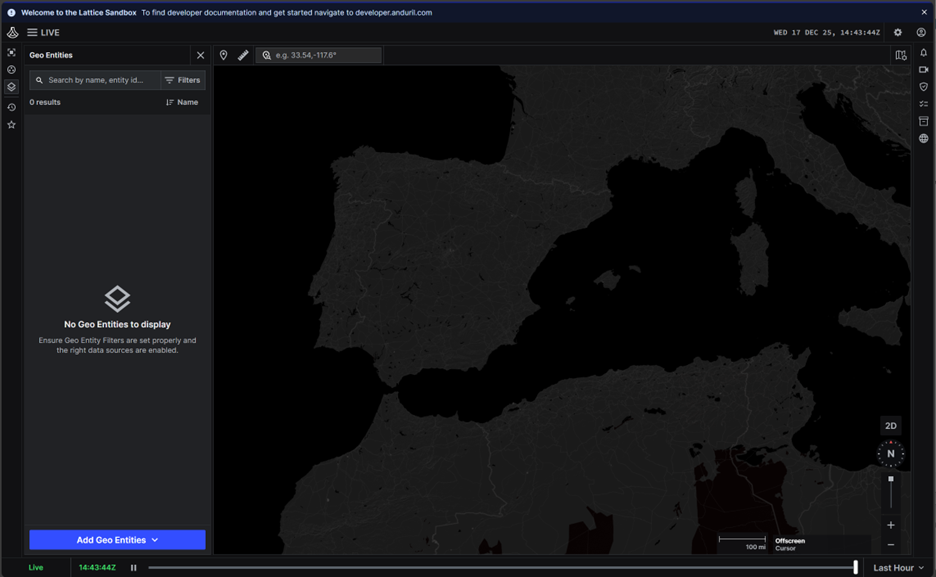
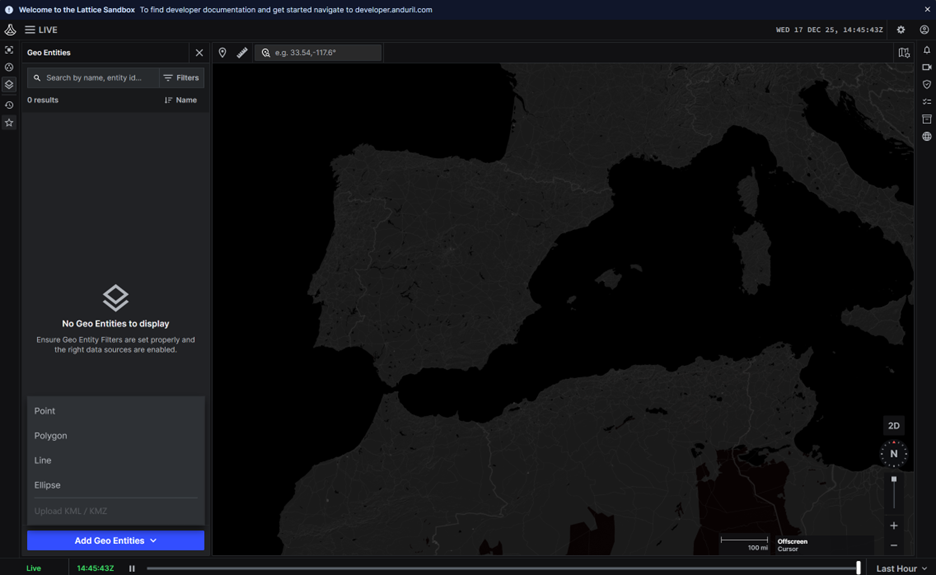
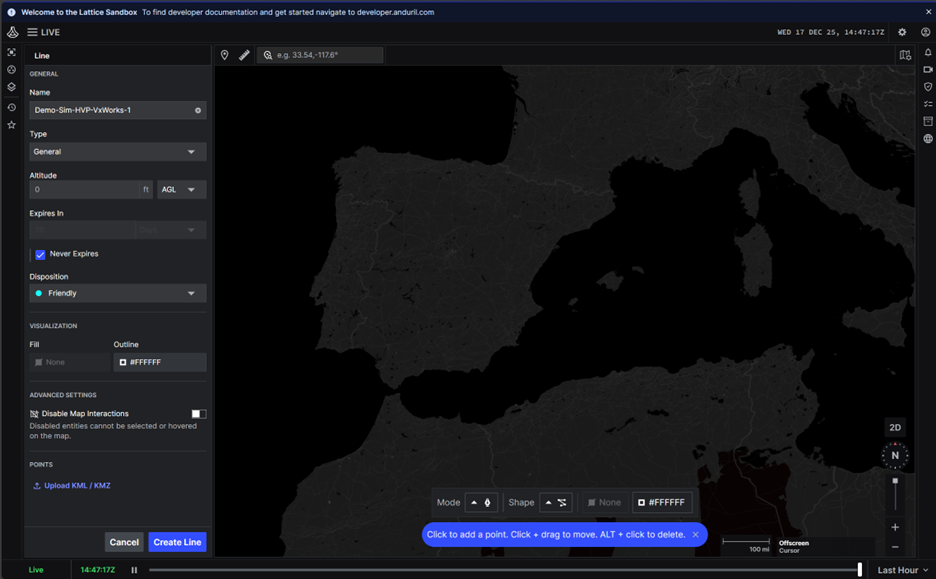
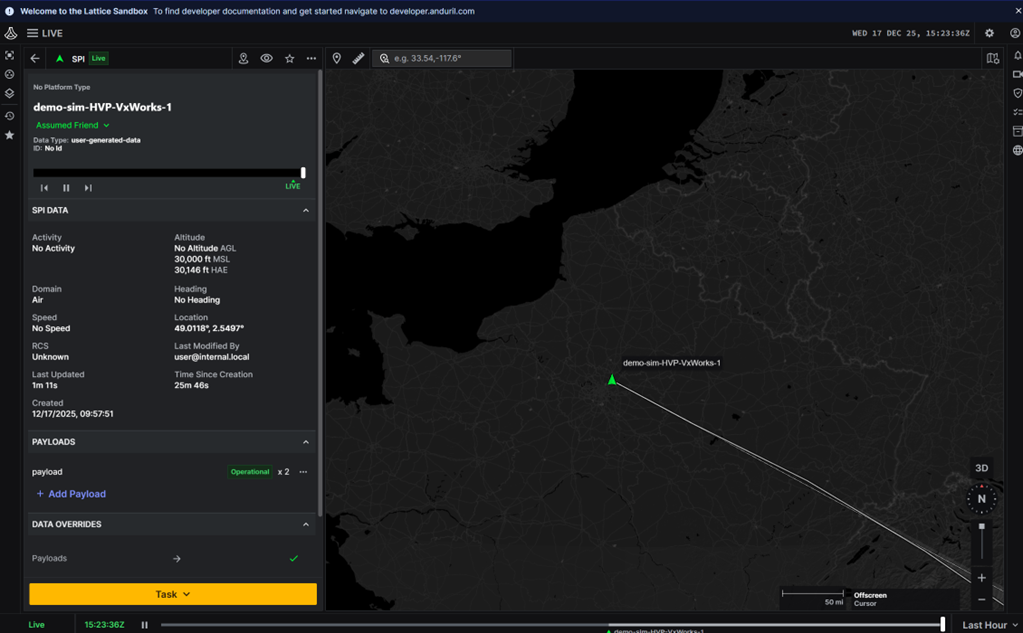
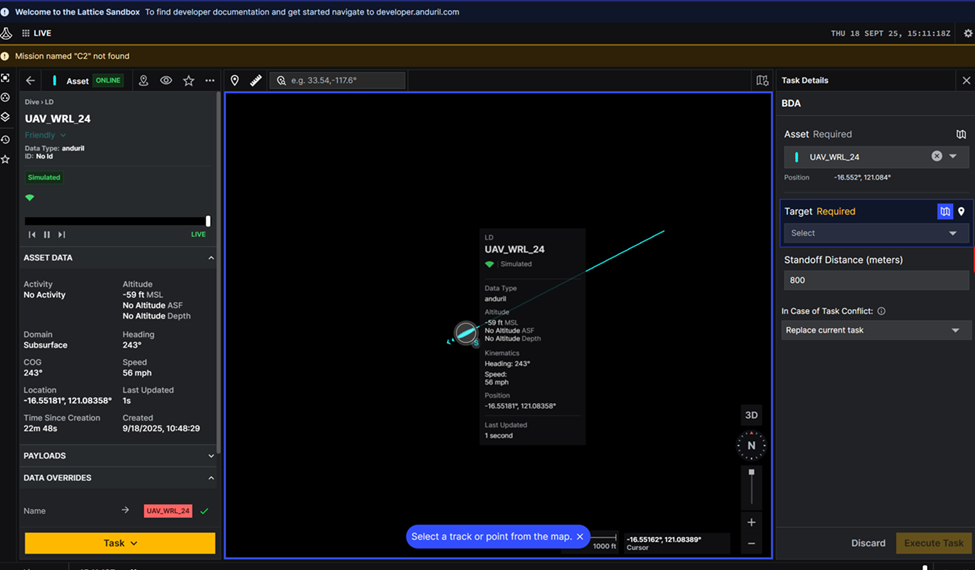
This platform provides end-to-end telemetry, command, and control for autonomous systems operating across the underwater, land, air, and space domains. It captures essential telemetry data (e.g., position, orientation, velocity) from each asset, providing real-time situational awareness within a single, unified operational picture.
For example, in a demonstration with an aerial asset, we use KML to add an overlay of the flight path from our certifiable Helix Platform with VxWorks running in a partition. The virtualized VxWorks environment captures telemetry data (latitude, longitude, altitude, heading, velocity) and generates a KML file that is streamed to Lattice OS. This provides real-time situational awareness of the aircraft’s trajectory within the Lattice C2 mesh, enabling commanders to visualize and track the asset alongside other platforms in the operational theater.
Conclusion
Wind River’s early access to the Anduril Lattice Sandbox and integration with Lattice SDK exemplifies our commitment to pushing the frontier of safety-critical innovation. The configurability of Helix Platform enables flexible system design tailored to your specific mission requirements. In an ideal production architecture, telemetry data flows through a dedicated partition using VirtIO for high-performance inter-partition communication, where it’s packaged and transmitted to Lattice. This creates clean separation of concerns — whether you need real-time command and control, comprehensive logging, or both — and the hypervisor ensures proper isolation while enabling all operational configurations. By enabling seamless bridges across airborne and space platforms through mission-configurable partitioning, we are helping organizations achieve operational superiority while accelerating the adoption of advanced, mission-critical technologies.
Supported Frameworks for VxWorks and Wind River Linux
ROS 2 (Robot Operating System 2)
VxWorks:
- Wind River ROS 2 Support: www.windriver.com/solutions/learning/ros2
- ROS 2 integration: Natively supported through Yocto/OpenEmbedded layers
- ROS 2 documentation: docs.ros.org
MOOS-IVP for autonomous marine vehicles:
- Homepage browse: www.moos-ivp.org
- Github Project: github.com/moos-ivp/moos-ivp
NASA F´ (F Prime)
Cross-platform support:
- F´ Framework: github.com/nasa/fprime
- F´ Documentation: nasa.github.io/fprime
- Compatible with VxWorks and Linux through POSIX™ interfaces
NASA Core Flight System (CFS)
Cross-platform support:
- CFS framework: github.com/nasa/cFS
- CFS documentation: cfs.gsfc.nasa.gov
- OSAL (Operating system abstraction layer): Supports VxWorks and Linux
- CFS OSAL guide: github.com/nasa/osal
SPACEROS:
Space-Grade Linux
Cross-platform support:
Additional Framework Support
DDS (Data Distribution Service):
- RTI Connext DDS: Certified for VxWorks and Linux
FACE:
- What Is FACE? | Wind River
- Native support in VxWorks, VxWorks 653, Helix Platform, and Wind River Linux
ARINC 653:
- Native support in VxWorks 653, Helix Platform, and VxWorks Cert
These frameworks enable standardized development across safety-critical and mission-critical systems, facilitating integration with platforms such as Anduril Lattice.
Contributors:
Dr. Justin Pearson, Senior Director, Architecture & Business Growth for A&D, Wind River
Hans Weggeman, Field Application Engineer for Aerospace & Defense, Wind River
Michael Mahoney, Solutions Architect, Wind River
* Anduril Lattice™ and Lattice SDK™ are property of Anduril™
Wind River Blog
The Wind River Blog is made up of a variety of voices: executives, technologists and industry enthusiasts. We hope to foster conversations and encourage the sharing of insights regarding the evolving landscape of intelligent, connected systems with our ecosystem of customers, partners and colleagues.
 Get our RSS feed